Define what a useful response means
An automated receipt can reassure a parent that a message arrived. A substantive response addresses their question or explains the action needed to answer it. Treating both as the same event can make reporting look healthy while families still wait for help.
Agree your definitions before setting a response standard. Decide what happens outside working hours, during holidays and when a question needs specialist input. A realistic service promise is more useful than an impressive target that colleagues cannot consistently meet.
Give the next action an owner
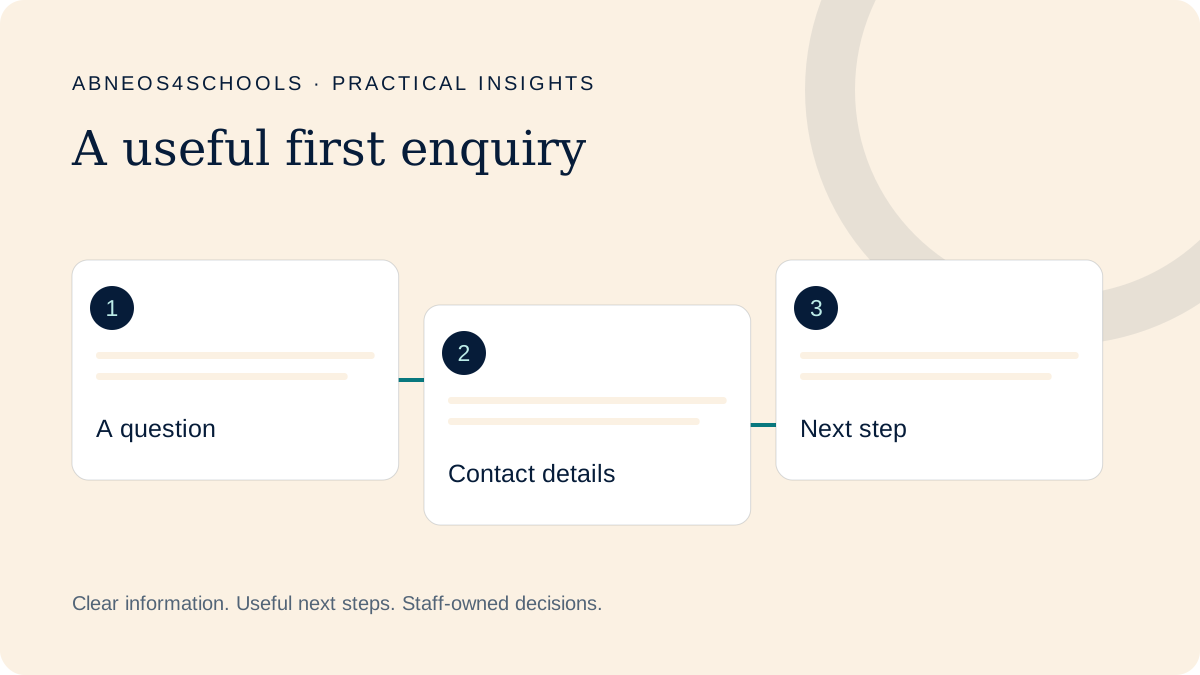
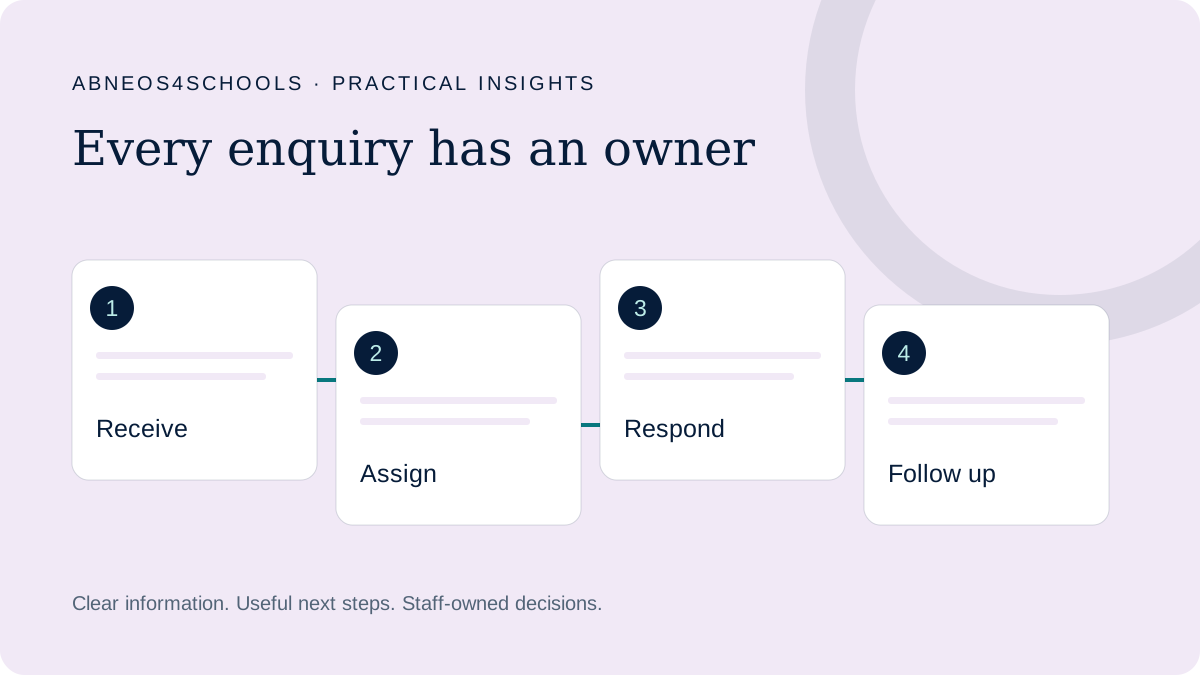
For each genuine enquiry, the team should be able to identify who is responsible, what needs to happen next and when it will be reviewed. This can work in an existing system or a carefully managed shared inbox; a replacement CRM is not automatically required.
Agree cover for absence and a route for questions that fall outside admissions. Keep reminders connected to a person who can act. A long queue of automated alerts does not establish ownership.
Answer the question before advancing the process
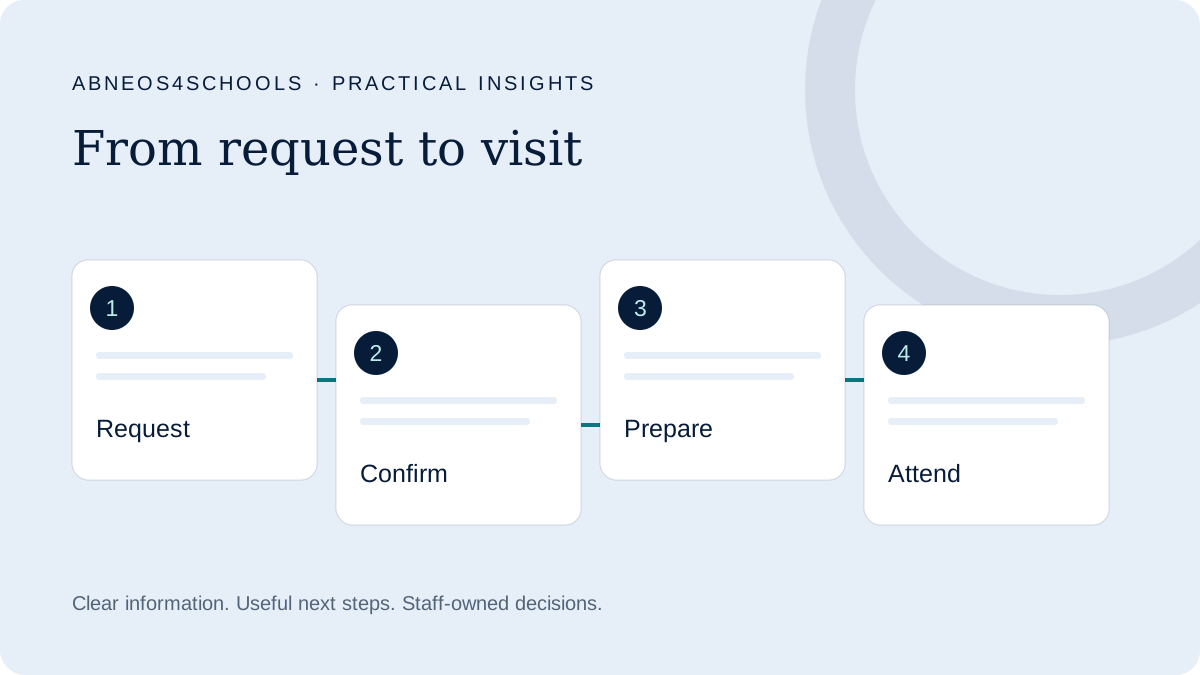
A family asking about fees may need that information before discussing a tour. A family already ready to visit needs arrangements. Use the context of the enquiry to decide the next step rather than sending the same sequence to everyone.
Approved templates can help staff respond consistently, provided they are adapted to the question. Keep sensitive individual circumstances with the right staff and avoid generating admissions, placement or scholarship decisions automatically.
Make follow-up relevant and bounded
Follow-up can refer to an unanswered question, an agreed visit or information promised during a conversation. Give the parent a useful action, such as replying with availability or asking for a later discussion.
Agree cadence, channel preferences and stopping conditions with the school. An operational reply to an enquiry and ongoing promotional messaging serve different purposes. The school should approve how each is handled under its applicable requirements.
If a family declines, changes plans or asks for no further contact, the workflow needs to reflect that. Test those exceptions alongside the standard route.
Start with one manageable workflow
Review an authorised sample of enquiries using only the information needed for the exercise. Look for patterns in ownership, response and next action. Avoid exporting identifiable pupil details into public or informal tools.
Choose one recurring coordination issue, such as unassigned enquiries or visits awaiting confirmation. Establish the baseline, agree the process, test delivery and review the result with staff. Expand automation only where the evidence and integration access support it.
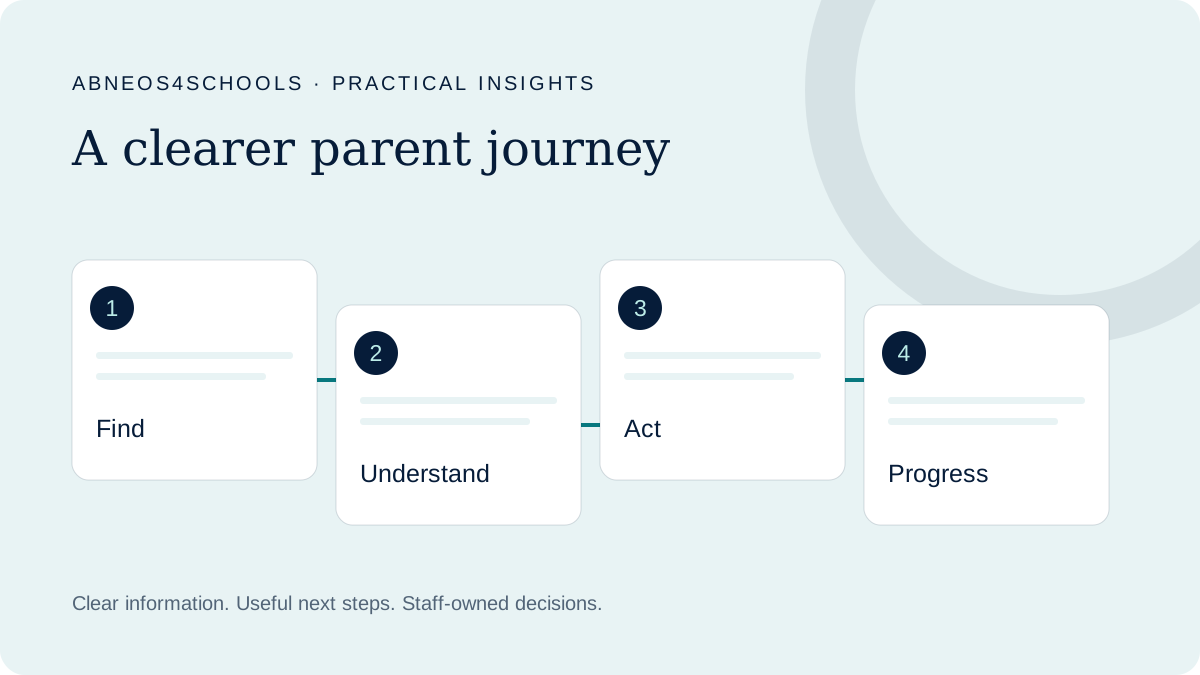
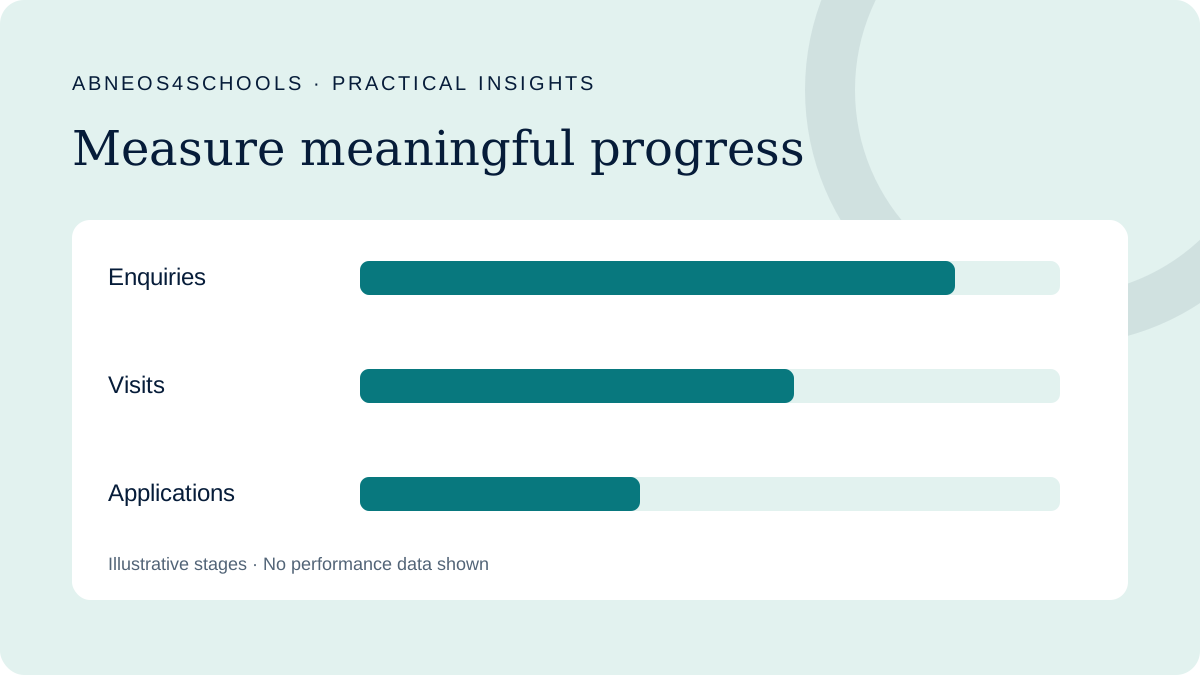
The aim is a parent who understands the next step and a colleague who knows what to do, with measurement that shows whether the process is working.
Watch the admissions follow-up explainer ↗
Opens the illustrative explainer on Scrimba. Examples are fictional.
Sources & scope
External guidance informs the relevant design principles. The school workflows, examples and review suggestions above are Abneos4Schools editorial recommendations, not validated conversion benchmarks or evidence of school results.
Start with your parent journey.
Take the self-reported assessment and get three practical priorities to explore with your team.