Start with a parent’s task
A parent arriving on your website may be comparing schools, checking whether an entry point is appropriate, or looking for a visit. A review is more useful when it follows one of those tasks than when it begins with personal preferences about the homepage.
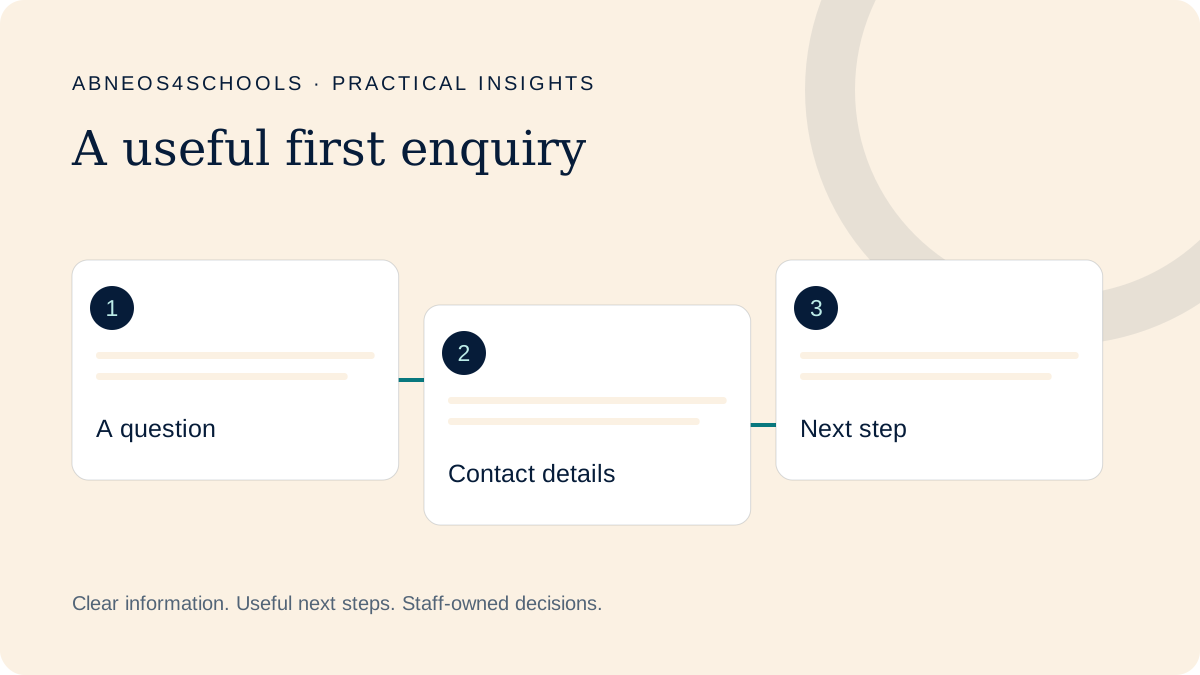
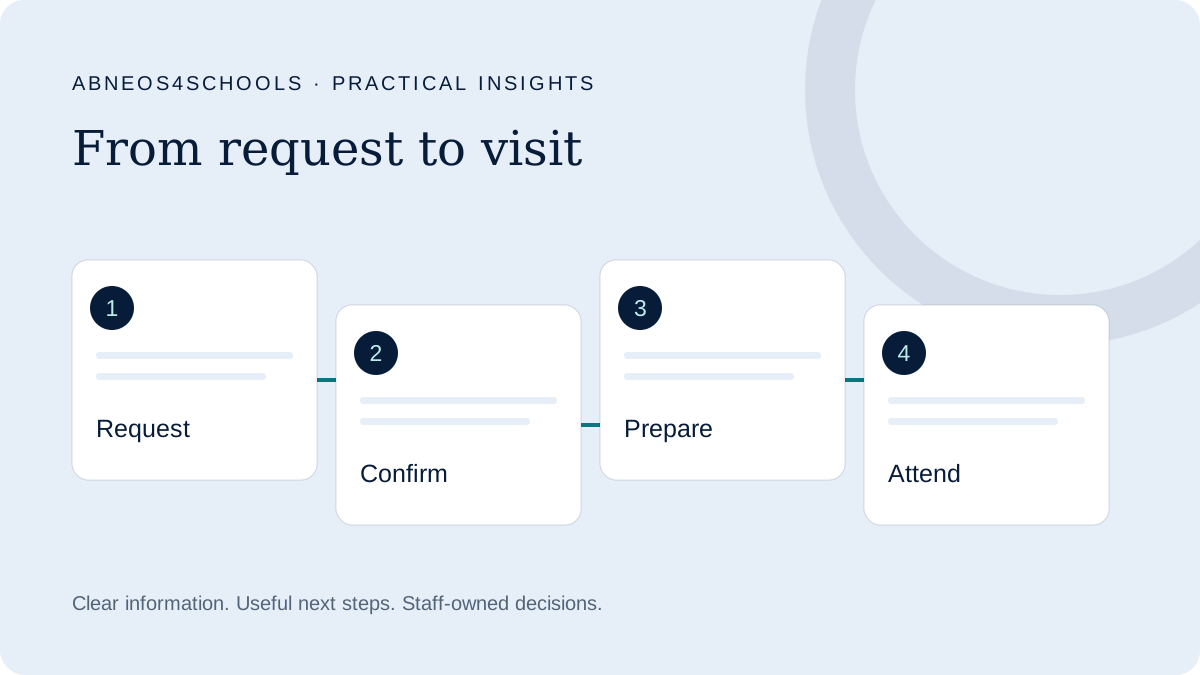
Choose one realistic scenario: a family wants to understand the admissions process and arrange a conversation about next year. Use a phone, start at the homepage and record what happens. Three minutes can be a useful internal exercise; it is not an industry performance benchmark.
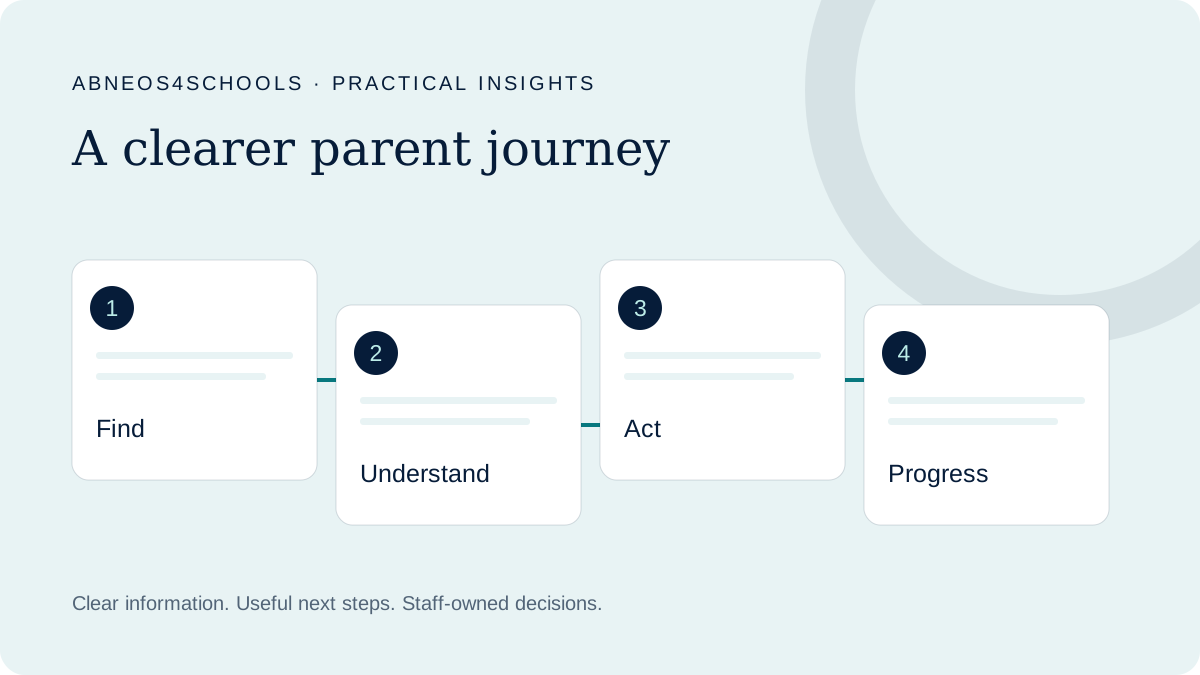
Follow four practical checks
- Find: can the parent locate the relevant admissions information without understanding your internal structure?
- Understand: are the entry stages, available information and next steps explained plainly?
- Act: is there an appropriate route for a question, a visit or a formal application?
- Progress: does the parent understand what happens after taking that action?
Keep these tasks distinct. A useful initial enquiry route does not need to perform the whole job of an application system.
Record evidence rather than assumptions
For each finding, record the page, device, action attempted and observable result. A screenshot of an outdated intake label is evidence of the label. It does not establish the number of families affected or the revenue lost.
Separate findings into observed, needing an internal check, and proposed improvements. For example, a tour page may clearly require a callback. Whether that creates a delay needs information from the team or an authorised test.
Useful next action: “Explain the booking state and the next contact parents should expect.”
Check the handover with your team
Public browsing can reveal clarity and navigation issues. Form delivery, ownership and response timing require internal evidence. Agree any test submissions with admissions, label them and avoid inventing a pupil application or reserving a genuine appointment.
Use approved test information and follow the school’s process for cleaning it up. Keep screenshots shared outside the school free of identifiable parent and pupil details.
Fix one obstacle and repeat the task
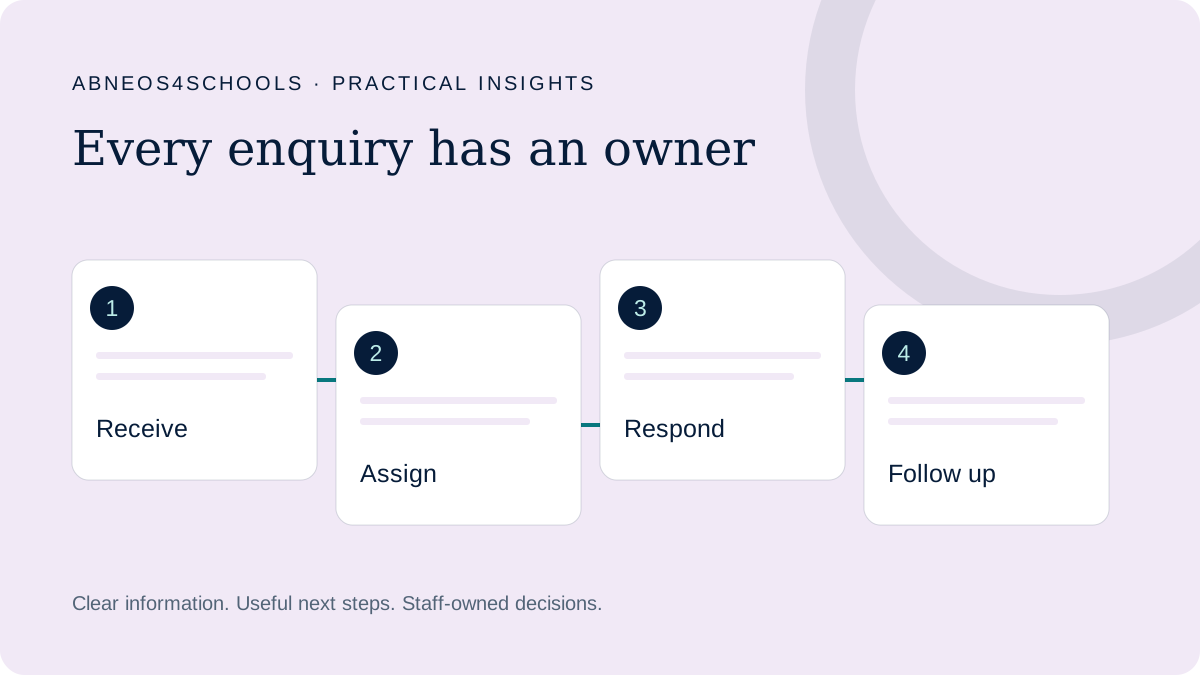
Prioritise a problem that prevents an important next step, followed by an issue that causes avoidable uncertainty. Agree a named owner and a way to check the change. Then repeat the same task on the same type of device.
Ask someone who did not write the page to try it. Their explanation of what they expect to happen can reveal a mismatch that a checklist misses. Maintain a short issue log rather than redesigning every page at once.
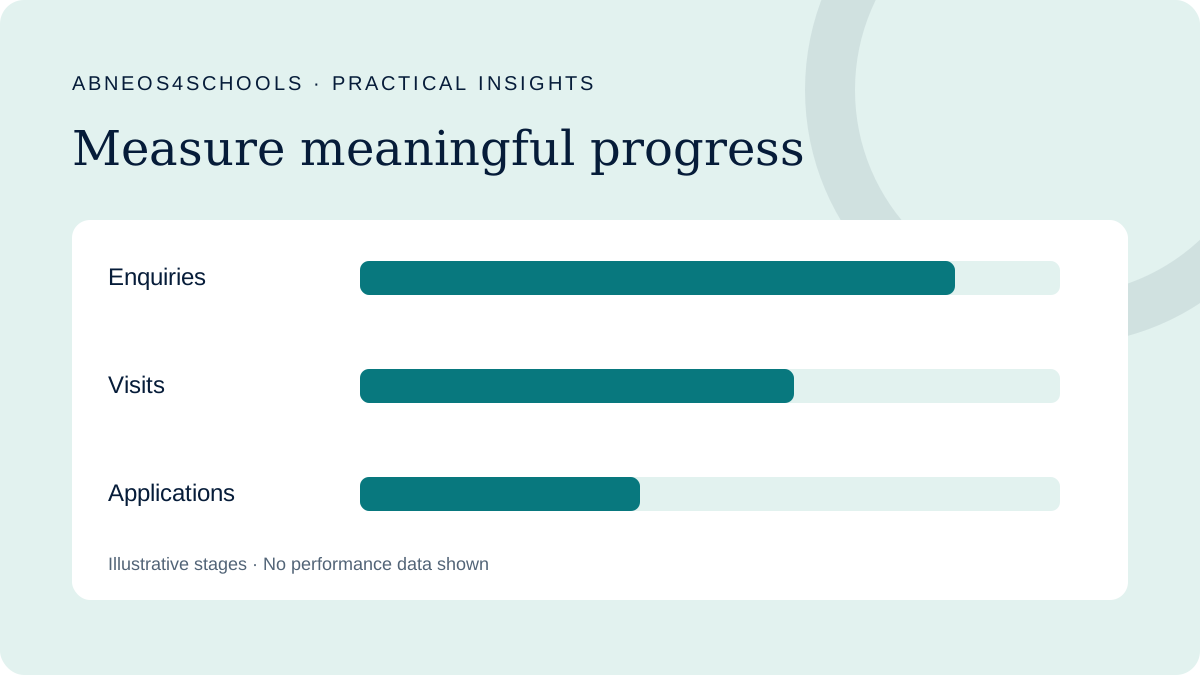
The first outcome should be a clearer journey you can demonstrate. Any claim about improved applications or enrolments needs separate measurement over an appropriate period.
Sources & scope
External guidance informs the relevant design principles. The school workflows, examples and review suggestions above are Abneos4Schools editorial recommendations, not validated conversion benchmarks or evidence of school results.
Start with your parent journey.
Take the self-reported assessment and get three practical priorities to explore with your team.